
Missing teeth can affect chewing, speech and confidence, but the cost of replacing them can create another concern. A single dental implant in India commonly costs ₹25,000 to ₹85,000, while your final estimate depends on the implant system, crown, bone health and treatment plan.
The National Institute of Dental and Craniofacial Research reports that U.S. adults aged 20 to 64 had about 25.5 natural teeth on average. NIDCR tooth loss data a dental evaluation can identify your needs and explain costs before treatment, helping you compare options beyond price alone. This guide explains the main costs and decisions before treatment.
Table of Contents
ToggleHow Much Do Dental Implants Cost?
Dental implants in India generally cost ₹25,000 to ₹85,000 for one tooth. In the US, one implant commonly costs $3,000 to $6,000.
The final amount can change when you replace several teeth or an entire dental arch. Some patients may also need procedures before implant placement. These treatments can add to the overall dental implant cost.
| Treatment | Indicative India Cost | Typical US Cost |
|---|---|---|
| Single tooth implant | ₹25,000 to ₹85,000 | $3,000 to $6,000 |
| Implant supported bridge | ₹40,000 to ₹2,00,000+ | $8,000 to $16,000 |
| All on 4 | ₹2.5 to ₹6 lakh per arch | $14,000 to $36,000 |
| Full mouth rehabilitation | ₹5 to ₹12 lakh+ | $30,000 to $60,000+ |
These are planning ranges rather than personalised quotes. Your dentist needs clinical and diagnostic information before confirming your actual dental implant price.
The cost also depends on whether you need one implant, several implants or a full arch restoration. The type of crown, implant brand and supporting procedures can further change the final estimate.
What Factors Affect Dental Implant Cost?
There is no single price for every implant case. Your treatment plan depends on the condition of your mouth and the type of restoration you need.
The main factors include the number of teeth being replaced, jawbone condition, implant and crown materials, diagnostic technology and the expertise of your dental team.
Number of Teeth Replaced
The number of missing teeth directly affects your implant treatment cost. A single missing tooth usually requires one implant fixture, one abutment and one crown. This gives the dentist a way to replace the missing tooth without relying on neighbouring teeth for support.
Multiple missing teeth can require a different approach. An implant supported bridge may replace several adjacent teeth without placing one implant for every missing tooth. For complete tooth loss, All on 4 dental implants or All on 6 dental implants may support a fixed dental arch with fewer strategically positioned implants. This creates a different cost structure from replacing individual teeth.
Your dentist will decide which approach fits your bone condition, bite, number of missing teeth and long term treatment goals.
Preparatory Dental Procedures
Your jawbone and gums need to provide suitable support for implant placement. If they do not, additional treatment may be needed before implant surgery.
Common procedures include
- Tooth extraction to remove a damaged or infected tooth before replacement
- Bone grafting when there is not enough jawbone to support the implant
- Sinus lift to create additional bone volume in selected upper jaw cases
- Gum treatment to control periodontal problems before implant placement
These procedures increase the total dental implant price because they involve additional appointments, materials and healing time.
For example, significant bone loss can make implant placement more complex. Treating gum disease first can also be important because healthy supporting tissues are needed for successful implant treatment.
Implant and Crown Materials
The implant fixture and dental crown can both affect your final quote. Titanium is widely used for implant fixtures because of its established clinical use and compatibility with bone. Zirconia provides a metal free alternative in selected cases. The type of dental implant crown also affects the price. PFM, ceramic and zirconia crowns can have different material and dental laboratory costs.
The implant brand can also influence the estimate. Premium implant systems from companies such as Straumann and Nobel Biocare may cost more than other systems. A higher price does not automatically make one system suitable for every patient. Your dentist should explain the selected implant brand, components and clinical reasons behind the recommendation.
Diagnostic Tests and Technology
Implant planning may require more than a standard dental X ray. A 3D CBCT scan can provide detailed information about your jawbone, tooth roots, nerves and sinus anatomy. This helps your dentist understand the available space before placing the implant. Digital planning can also help determine the intended implant position before surgery.
Guided implant surgery may be used in suitable cases to support detailed surgical planning. These technologies can increase your initial treatment expense. They can also provide information that a routine two dimensional X ray cannot provide. The need for each scan or technology depends on your case. Your dentist should explain why it is required as part of your treatment plan.
Dentist’s Expertise and Location
Your dental implant cost also reflects the professional managing your treatment. Complex cases may involve an implantologist, periodontist, oral surgeon or prosthodontist. Each specialist brings expertise relevant to different parts of implant treatment.
Location can affect pricing as well. Clinics in major cities may have higher operating, staffing and laboratory costs.
For this reason, the lowest advertised quote may not always be the lowest overall treatment cost. Compare the clinician, implant system, restoration, diagnostic work and follow up services before making a decision.
What Is Included in Dental Implant Cost?
A complete implant quote should explain the major parts of your treatment. Comparing two prices without checking their inclusions can give you a misleading picture.
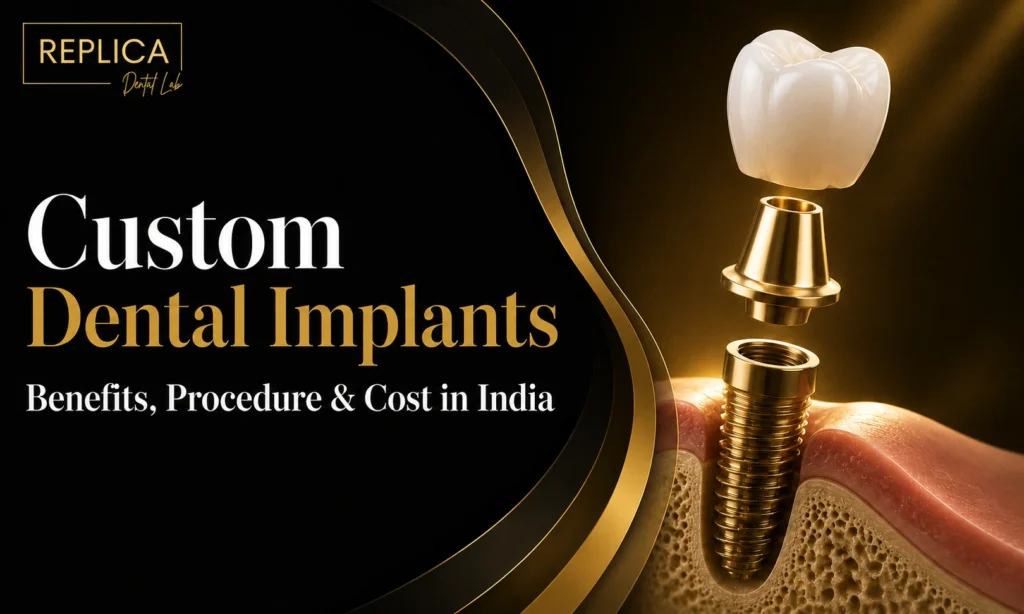
A single tooth implant generally has three core components
Implant fixture → Abutment → Dental crown
The fixture replaces the missing tooth root. The abutment connects the implant fixture to the crown. The crown becomes the visible part of the replacement tooth and provides its chewing surface.
Depending on the clinic and treatment plan, your quotation may also include
- Consultation and treatment planning
- Dental imaging or CBCT
- Implant placement surgery
- Temporary restoration
- Final crown
- Follow up appointments
Some clinics quote only the implant fixture. Others provide a more complete treatment figure.
This difference can make two apparently similar dental implant costs difficult to compare. Always ask for an itemised estimate before deciding between treatment plans.
A useful quote should make it clear what you are paying for and which procedures may be charged separately.
How Much Do Different Implant Treatments Cost?
The right treatment depends on the number and location of missing teeth. Your dentist may recommend different implant supported restorations based on your bone health, bite and functional needs.
| Treatment | Main Purpose | Indicative India Range |
|---|---|---|
| Single implant | One missing tooth | ₹25,000 to ₹85,000 |
| Implant bridge | Several adjacent teeth | ₹40,000 to ₹2,00,000+ |
| All on 4 | One complete dental arch | ₹2.5 to ₹6 lakh |
| Full mouth rehabilitation | Upper and lower arches | ₹5 to ₹12 lakh+ |
A single dental implant is generally used to replace one missing tooth, so it is important to understand the potential concerns associated with delay replacing a missing tooth. It can provide an individual replacement without requiring an implant for every neighbouring tooth.
An implant supported bridge can replace several adjacent missing teeth. The treatment may use fewer implants than the number of teeth being replaced. All on 4 and All on 6 treatments work differently. They use strategically positioned implants to support a complete fixed dental arch.
Full mouth rehabilitation is more extensive. It can involve multiple implants, restorations and other procedures across the upper and lower arches. The number in the treatment name does not tell you the complete price. Your individual clinical condition and restoration plan still determine the final estimate.
Why Can Dental Implant Treatment Cost More?
Your initial estimate can increase when your mouth needs additional treatment. These costs usually relate to clinical complexity rather than the implant fixture alone.
For example, untreated gum disease may need periodontal treatment before implant placement. Significant bone loss may require grafting before an implant can be placed safely. Other factors that can increase the overall cost of dental implants include
- Complex tooth extraction
- Sinus augmentation
- Extensive bone grafting
- Premium implant systems
- Zirconia or premium ceramic restorations
- Temporary teeth
- Sedation requirements
- Multiple surgical appointments
The treatment timeline can also become longer when healing procedures are needed first. Bone grafting may require a healing period before implant placement. After placement, osseointegration allows the implant to integrate with the surrounding bone before the final restoration is fitted.
This means a lower initial quote does not necessarily mean a lower total treatment cost. The full treatment pathway matters.
Does Dental Insurance Cover Dental Implants?
Dental insurance may cover some implant related expenses, but coverage varies by policy. Some plans may cover the crown or extraction while excluding the implant fixture itself. Other policies may have waiting periods, annual limits or specific exclusions.
Before treatment, ask your insurer about:
- Implant surgery coverage
- Crown coverage
- Bone graft coverage
- Annual benefit limits
- Waiting periods
- Pre authorisation requirements
- Deductibles and exclusions
Ask for the coverage details in writing when possible. This can help you understand your expected out of pocket expenses before treatment begins. If you are planning treatment in India from another country, your budget should include more than the clinic quote.
Consider travel, accommodation, local transportation and follow up visits. A lower dental implant cost in India may not represent your total treatment budget if you need to travel for care.
How Can You Manage Dental Implant Costs?
Managing dental implant expenses starts with understanding exactly what your treatment plan includes. Begin with a written estimate that separates clinical procedures, implant components and restoration costs. Ask which procedures are essential for your case and whether clinically appropriate alternatives exist.
A simple comparison can help
Treatment need → Implant system → Crown material → Additional procedures → Total quote
This approach makes it easier to compare complete treatment plans rather than advertised starting prices. Some clinics may also provide EMI or healthcare financing options. If paying the complete amount upfront is difficult, ask about available payment options before starting treatment.
Most importantly, avoid choosing an implant only because it has the lowest advertised price. A complete quote should explain the clinician, implant components, laboratory work, additional procedures and follow up care. The goal is not simply to find the cheapest implant. It is to understand what you are paying for and whether the proposed treatment suits your clinical needs.
How Do You Get an Accurate Dental Implant Cost?
An accurate custom dental implants cost estimate requires an examination and treatment plan based on your individual oral condition. Online prices can help you create a rough budget, but they cannot account for your individual oral condition. Two patients with the same number of missing teeth may receive different treatment plans and different estimates.
Your dentist will typically assess
- Number and location of missing teeth
- Jawbone volume and density
- Gum health
- Bite and neighbouring teeth
- Required implant system
- Crown material
- Need for grafting or extraction
A CBCT scan and clinical examination can then help the dentist assess implant placement and restoration requirements. The process can be thought of in three steps
Clinical examination → Diagnostic planning → Personalised treatment estimate
This turns a broad online price range into a case specific estimate. It also gives you a clearer picture of both your financial commitment and your treatment timeline.
Explore Dental Implant Treatment With Replica Dental
Choosing an implant treatment is about more than finding a low advertised price. Your plan should consider clinical needs, implant materials, restoration options, treatment time and overall cost.
Replica Dental can help you understand the available options before you commit to treatment.
Discuss your missing teeth, treatment goals and expected budget with the dental team. A personalised assessment can help you understand which procedures you may need and what your complete treatment plan could involve. The aim is to give you clearer information before you make a decision. Speak with Replica Dental today to discuss your dental implant treatment and get a personalised cost estimate.
Frequently Asked Questions
Treatment can take several months when healing and osseointegration are required. Immediate loading may shorten the timeline for suitable patients after a dentist confirms adequate bone and stable implant conditions.
The answer depends on your treatment, maintenance and replacement needs. Compare the expected long term costs, function, maintenance requirements and clinical suitability of both options with your dentist.
Some patients qualify for immediate implant placement after extraction. Your dentist must confirm suitable bone, infection control and other clinical conditions before recommending immediate placement.
A missing tooth can affect chewing and neighbouring teeth. Jawbone volume can also change over time, which may make future dental implant placement more complex or require additional treatment.