
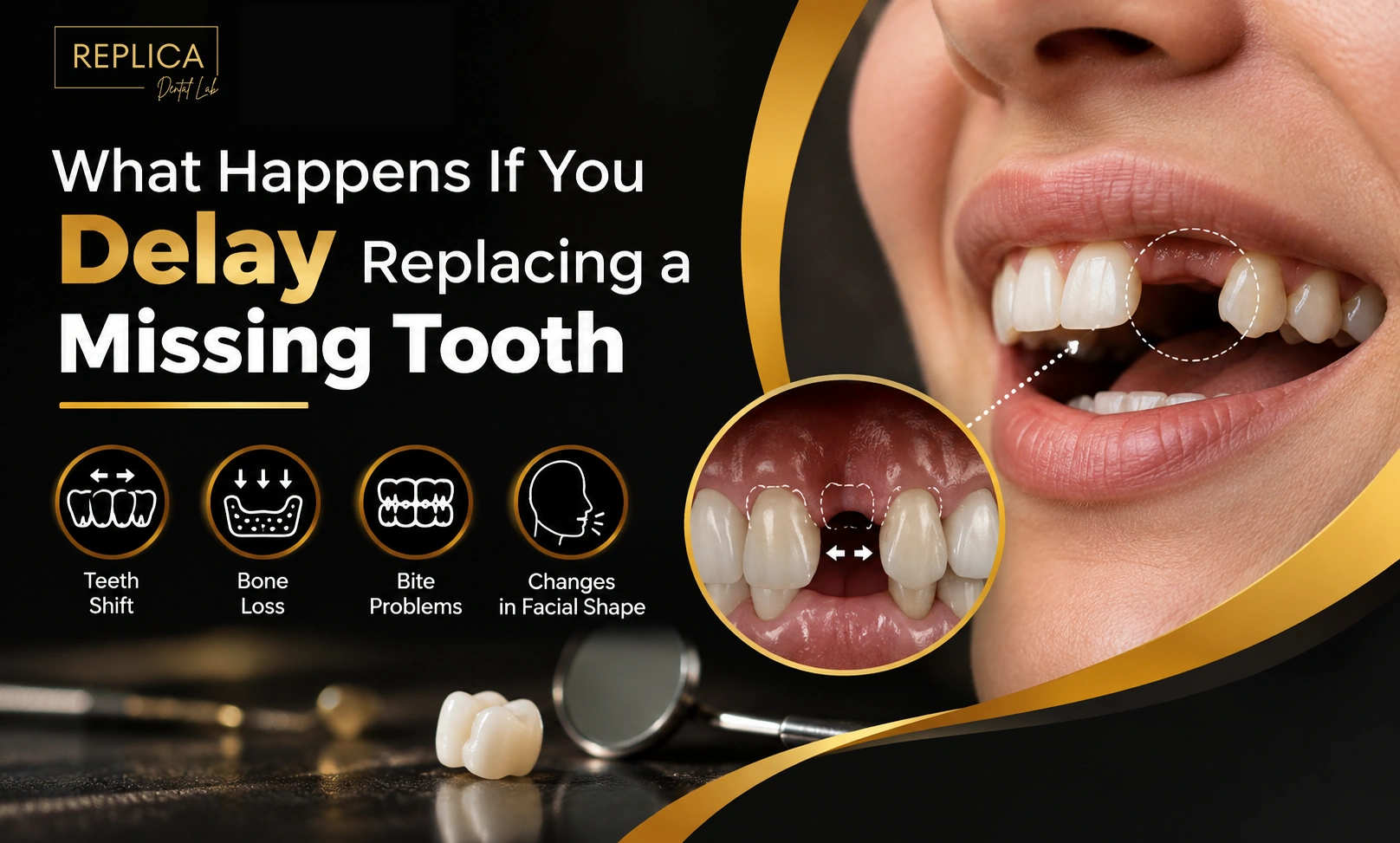
The process of losing a tooth is one thing that people like to put out of their minds as fast as possible. “After all, this is just a single tooth. I am sure no one will even notice it. I will fix it later.” But later never comes. Weeks pass by, months pass by, and years pass by.
What no one ever tells you is that this lost tooth is doing damage to your mouth much more than you can actually see. The bone and the rest of your teeth start changing. And the longer you wait, the harder and more expensive it becomes to fix it. This blog post will explain to you everything about delaying the replacement of a missing tooth – and what you need to do about it. Let’s get started!
Why Do People Delay Replacing a Missing Tooth?
Most people know they should replace a missing tooth – but they keep putting it off. Here is why that happens more often than you think.
- Cost concerns – Dental treatments feel expensive and many people hope to save up first but never get around to it.
- No pain no urgency – If it does not hurt, it does not feel like a problem that needs fixing right now.
- Fear of dental procedures – Many people are genuinely scared of sitting in a dental chair for a long treatment.
- Busy schedule – Life gets in the way and dental appointments keep getting pushed to next week.
- Tooth is not visible – If the missing tooth is at the back, people feel nobody will notice so why bother.
- Lack of awareness – Most people simply do not know how much damage a missing tooth causes over time.
What Happens to Your Teeth and Bone After Tooth Loss?
Most people think a missing tooth is just a gap. But underneath that gap, your body is already making changes you cannot see or feel – at least not yet. Here is what is really happening.
1. Your Jawbone May Begin to Shrink
Your jawbone stays strong because your tooth roots constantly stimulate it. Every time you chew, bite, or even clench your teeth – that pressure travels through the roots and tells your bone to stay active and healthy. When a tooth is gone, that stimulation stops completely.
Without that signal, your body sees no reason to maintain the bone in that area. So it slowly starts to reabsorb it – meaning the bone literally shrinks away over time. In the first year alone after tooth loss, you can lose a significant amount of bone volume in that area. As years pass, the bone loss becomes more serious and visible. This is why people who have had missing teeth for a long time start to notice a sunken or aged appearance in their face – even if they cannot explain exactly why.
2. Neighboring Teeth May Shift
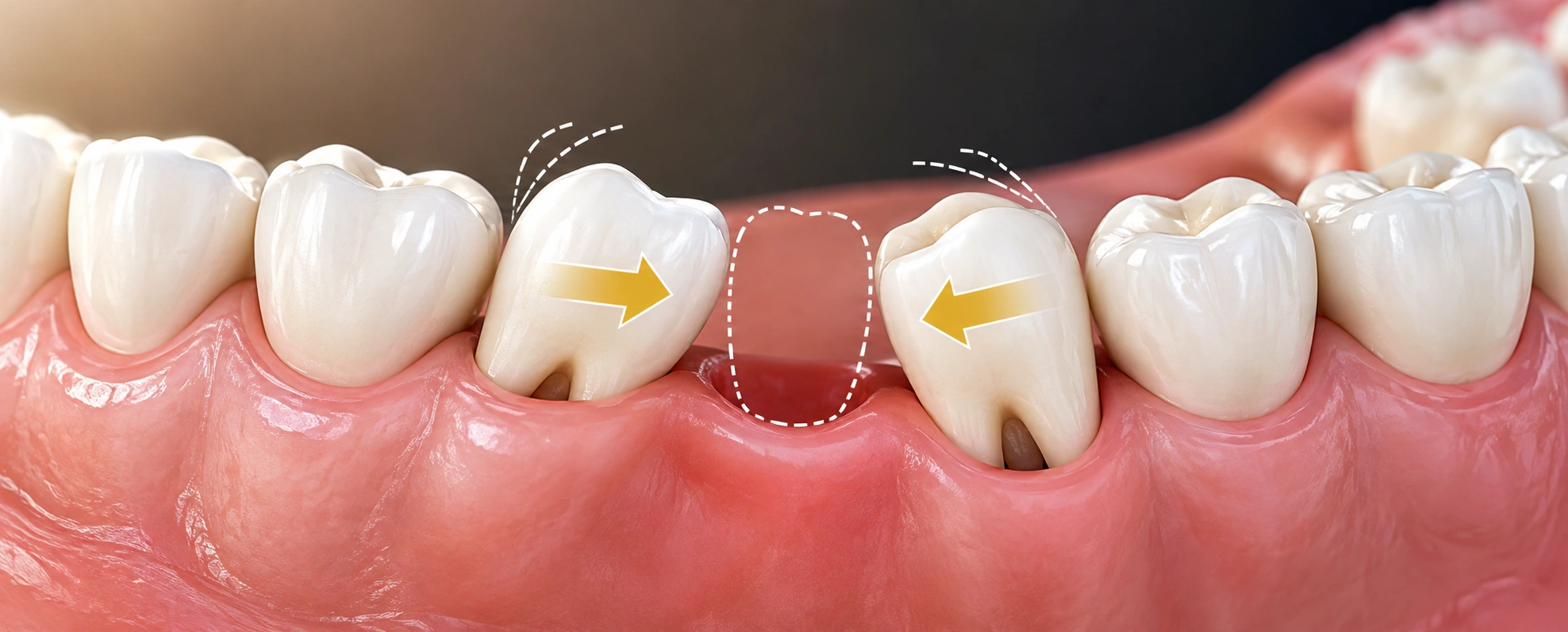
Your teeth are not sitting independently in your mouth. They actually support and hold each other in place. When one tooth is missing, that balance is disturbed. The teeth next to the gap slowly start to lean or tilt towards the empty space. The tooth above or below the gap – called the opposing tooth – may also start to grow downward or upward into that space over time.
This shifting is gradual so most people do not notice it happening. But over months and years the movement becomes significant enough to affect your entire dental alignment. Teeth that were once straight can start to look crowded or uneven. And once teeth have shifted, straightening them out again requires additional treatment – adding both time and cost to your overall dental journey.
3. Your Bite Can Change
When your teeth shift, your bite changes with them. Your bite is the way your upper and lower teeth come together when you close your mouth. It is carefully balanced. Even one missing tooth can throw that balance off completely over time.
An uneven bite puts extra pressure on certain teeth that were never meant to carry that load. This can lead to chipping, cracking or excessive wear on those teeth. Some people also start experiencing jaw pain, clicking sounds in their jaw joint or tension headaches – all connected to a bite that is no longer properly aligned. What started as a single missing tooth can eventually create a chain of dental problems that affect your entire mouth and even your jaw joints.
4. Chewing May Become More Difficult
One missing tooth might not seem like a big deal at first. But your mouth works as a complete system. When one part is missing, the rest has to compensate. You naturally start avoiding chewing on the side where the tooth is missing. This puts more pressure on the other side and on specific teeth that were not designed to do all that extra work.
Over time this leads to uneven wear, sensitivity and even damage to those overworked teeth. Beyond that, avoiding certain foods because chewing is uncomfortable is very common among people with missing teeth. Hard foods, crunchy vegetables, and chewy meats become difficult. This can quietly affect your nutrition and overall health without you even connecting it back to that missing tooth.
5. Your Smile and Facial Appearance May Change

This is the consequence most people do not expect. A missing tooth – especially when combined with jawbone loss – can visibly change the way your face looks. The area around the missing tooth can appear sunken or collapsed. Your cheeks may start to look slightly hollow in that region.
For front teeth the impact on your smile is immediately visible. But even missing back teeth affect your facial structure over time because the bone loss beneath the surface changes the overall support of your face. People often describe looking older than they actually are – and in many cases this is directly connected to untreated tooth loss. Replacing a tooth is not just a dental decision – it is also about maintaining your natural facial appearance.
6. The Replacement Process May Become More Complicated
Here is something most people do not realise – the sooner you replace a missing tooth, the simpler the process usually is. When you wait too long, the bone has already shrunk, the neighboring teeth have already shifted and your bite has already changed. All of these things need to be addressed before or during the replacement process.
For example if you want a dental implant but have significant bone loss, you may need a bone grafting procedure first – which adds time, cost and recovery to your treatment. What could have been a straightforward implant placement becomes a multi-step process. Waiting does not just delay your smile – it actively makes the solution harder to achieve.
How Long Can You Wait to Replace a Missing Tooth?
Honestly – the sooner the better. Most dentists recommend starting the replacement process within three to six months of losing a tooth. This is because the most significant bone loss happens in the first few months after tooth loss.
That said, it is never too late to explore your options. Even if you have waited years, solutions are still available – they may just require additional steps like bone grafting or orthodontic correction first. The key is to not let more time pass. Every month you wait makes the situation a little more complicated and a little more costly than it needed to be.
What Are Your Options for Replacing a Missing Tooth?
The good news is you have more than one option to replace a missing tooth. Your dentist will recommend the best one based on your specific situation.
- Dental Implants – A dental implant is a titanium post placed into your jawbone that acts like a natural tooth root. It is the most permanent and natural feeling solution available today. Learn more about dental implant benefits, procedure and cost in India.
- Dental Bridges – A bridge uses the teeth on either side of the gap as support to hold an artificial tooth in place. It is a fixed and non-removable option that works well in many cases. and can also be crafted using zirconia crown material for a stronger, metal-free finish.
- Dentures – Dentures are removable replacements for missing teeth. They are a more affordable option and can replace one tooth or multiple teeth depending on your situation.
Each option has its own advantages and the right choice depends on your bone health, budget and personal preference. Talk to your dentist to find out which solution suits you best.
What Should You Do If You Have a Missing Tooth?
If you have a missing tooth – do not wait. Here is what you should do right now.
- Book a dental consultation as soon as possible to assess your bone and gum health
- Ask your dentist about all replacement options available for your specific situation
- Get an X-ray done to check how much bone loss has already occurred
- Discuss your budget with your dentist so they can recommend the most suitable solution
- Act within three to six months of tooth loss to keep your options simple and affordable
The earlier you take action, the easier and more affordable your treatment will be. Do not let fear or delay cost you more than it needs to.
Conclusion
A missing tooth is never just a cosmetic problem. It is a health issue that quietly gets worse with every passing month. Your bone shrinks, your teeth shift, your bite changes and your face slowly starts to look different – all because of one gap that seemed harmless at first.
The good news is that modern dentistry has excellent solutions available – from dental implants to bridges to dentures. But the best results always come to those who act early. If you or someone you know has a missing tooth, do not put it off any longer. Book that consultation today. Your future smile will thank you for not waiting.