
A zirconia crown in India costs ₹6,500 to ₹35,000 per tooth in 2026. The range depends on three things: the zirconia grade used (3Y, 4Y, or 5Y), whether the crown is monolithic or layered, and the city where the clinic operates. Most patients in metro cities pay between ₹12,000 and ₹22,000 per tooth for a standard monolithic zirconia crown.
For dentists reading this to price out lab work rather than patient billing, the lab cost per unit is a separate number from what you charge the patient – we’ve broken both out below.
Table of Contents
ToggleWhy the Zirconia Crown Price Range Is So Wide
Two clinics can quote a patient completely different prices for what looks like the same crown. This isn’t random. Zirconia crown pricing is built from five variables, and changing any one of them moves the final number:
- Zirconia grade – 3Y, 4Y, or 5Y zirconia have different strength-to-translucency ratios and different material costs.
- Monolithic vs. layered fabrication – layering adds hand-finishing time, which adds cost.
- CAD/CAM workflow quality – digital scanning and 5-axis milling cost more than older workflows but reduce remakes.
- City and clinic overhead – rent and staffing in Mumbai or Delhi are not the same as in a Tier-2 city.
- What’s included in the quote – some prices cover scanning, shade matching, and a warranty; others charge these separately.
Once you know which of these five is driving a quote, the “wide range” stops being confusing.
Zirconia Crown Cost by Grade (2026)
| Zirconia Grade | Best For | Price per Tooth (Patient-Facing) |
|---|---|---|
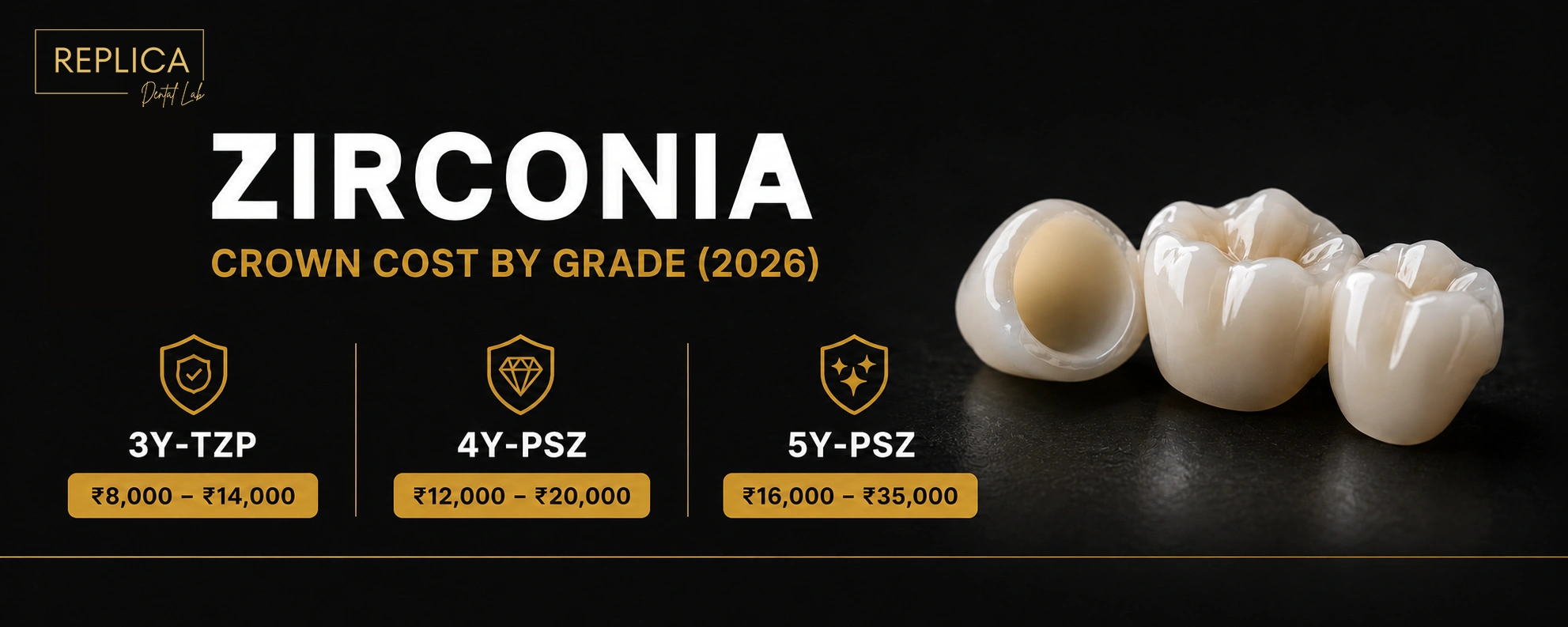
| 3Y-TZP (high strength, lower translucency) | Molars, bruxism cases | ₹8,000 – ₹14,000 |
| 4Y-PSZ (balanced strength & aesthetics) | Premolars, general use | ₹12,000 – ₹20,000 |
| 5Y-PSZ (high translucency, multilayer) | Anterior teeth, aesthetic zones | ₹16,000 – ₹35,000 |
Higher-translucency, multilayer zirconia blocks cost more to source and mill, which is why 5Y-PSZ crowns sit at the top of the range. For posterior teeth where strength matters more than translucency, 3Y-TZP remains the more economical and clinically reasonable choice. Replica Dental mills both monolithic and multilayered zirconia crowns on 5-axis CNC systems, so the grade you prescribe doesn’t limit which lab can produce it.
Zirconia Crown Cost by City (2026)
| City | Typical Price per Tooth |
|---|---|
| Mumbai | ₹16,000 – ₹30,000 |
| Delhi NCR | ₹15,000 – ₹28,000 |
| Bangalore | ₹14,000 – ₹25,000 |
| Hyderabad | ₹6,500 – ₹22,000 |
| Pune | ₹12,000 – ₹20,000 |
| Ahmedabad / Tier-2 cities | ₹9,000 – ₹16,000 |
Metro cities carry higher rent and staffing costs, which clinics factor into their per-crown pricing. This is why the same crown, milled to the same specification, can cost 30–40% more in Mumbai than in a Tier-2 city.
What a Dental Lab Charges a Dentist vs. What a Dentist Charges a Patient
This is the number most cost guides skip, and it’s the one that actually matters if you’re a dentist trying to price your own treatment plans or evaluate a lab.
A clinic’s patient-facing price isn’t the lab’s price – it includes the dentist’s clinical time, chairside adjustment, consumables, and clinic overhead on top of the milled crown itself. When you’re sourcing from a digital lab, the per-unit lab fee is a fixed, quotable number, separate from what you bill the patient.
Knowing this split lets you set your own margin with a clear number, instead of estimating from patient-facing prices published by clinics that aren’t disclosing their lab cost.
What’s Usually Included in the Price – and What Isn’t
Before comparing quotes, check what’s actually covered. A lower number that excludes half the workflow isn’t a lower price.
Typically included:
- Digital or conventional impression/scan
- Shade selection
- Crown fabrication and milling
- Try-in and fit adjustment
- A basic warranty period
Usually charged separately:
- Root canal treatment, if needed before the crown
- Core build-up on a heavily damaged tooth
- Extraction or gum treatment
- A temporary crown, in some clinics
Ask for these line items before comparing two quotes side by side. A ₹9,000 quote that excludes core build-up can end up costing more than a ₹14,000 quote that includes it.
Zirconia vs. PFM vs. E.max: A Quick Cost Comparison
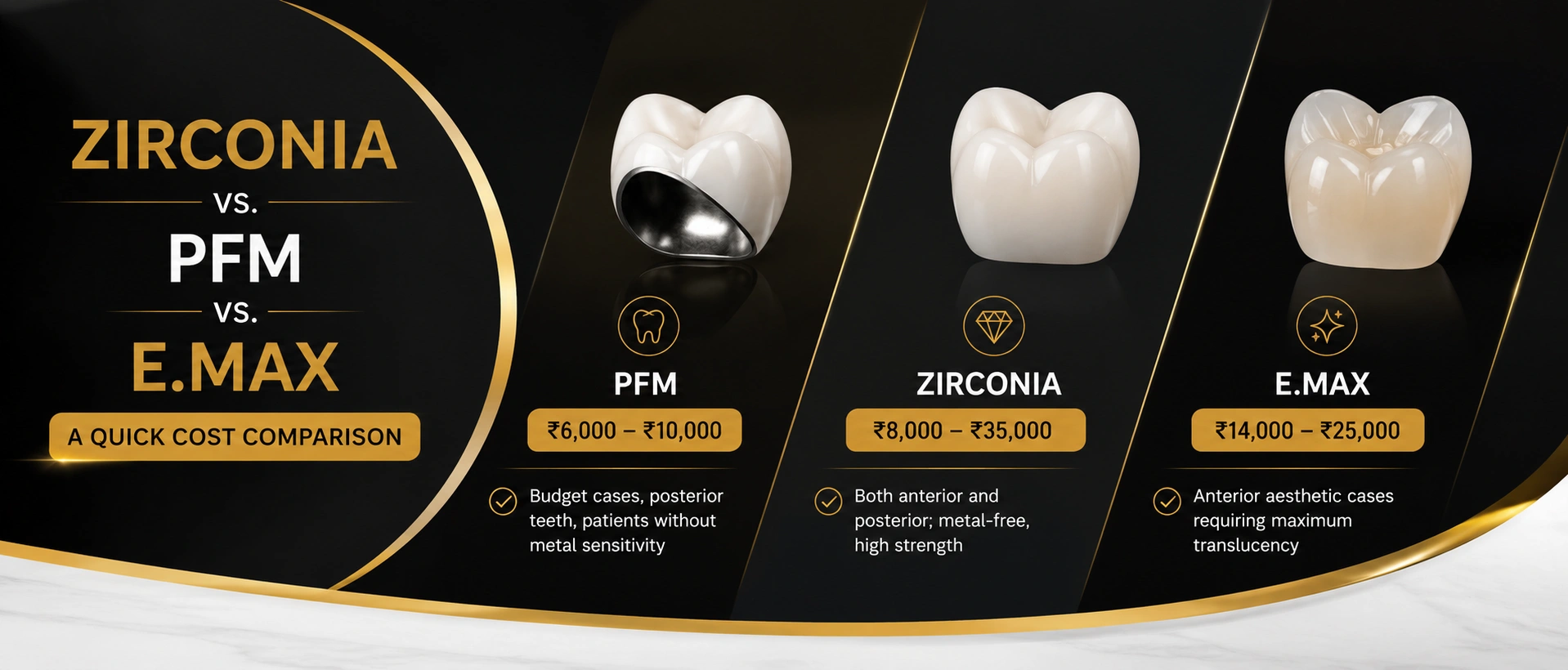
| Material | Price per Tooth | Where It's Used Best |
|---|---|---|
| PFM | ₹6,000 – ₹10,000 | Budget cases, posterior teeth, patients without metal sensitivity |
| Zirconia | ₹8,000 – ₹35,000 | Both anterior and posterior; metal-free, high strength |
| E.max | ₹14,000 – ₹25,000 | Anterior aesthetic cases requiring maximum translucency |
Zirconia sits between PFM and E.max on cost but covers a wider range of clinical situations than either, which is why it’s become the default recommendation for most crown cases in 2026.
How Long a Zirconia Crown Lasts
With correct preparation, occlusion, and cementation, a zirconia crown typically lasts 10 to 15 years, and many go longer with good oral hygiene. Longevity depends more on prep design and lab execution than on price paid – a mid-range crown milled correctly will outlast a premium-priced crown with a poor margin fit.
Conclusion
Zirconia crown cost in India isn’t one number – it moves with grade, city, and what’s included in the quote. 3Y-TZP suits posterior strength at the lower end of the range; 5Y-PSZ suits anterior aesthetics at the higher end. Metro pricing runs 30–40% above Tier-2 pricing for the same specification. And for dentists, the number that matters for planning isn’t the patient-facing price at all — it’s the per-unit lab cost, which stays fixed regardless of what a clinic in Mumbai or Ahmedabad charges at the chair.
Use the grade and city tables above as a reference point when a quote looks off, and confirm your own lab pricing directly rather than estimating it from patient-facing numbers.
Frequently Asked Questions
Most patients pay between ₹9,000 and ₹25,000 per tooth. Entry-level quotes start around ₹6,500; premium multilayer anterior crowns can reach ₹35,000.
Yes. Monolithic zirconia requires less hand-finishing, so it's generally more cost-effective and more predictable than layered zirconia.
The difference usually comes down to zirconia grade, lab workflow (digital vs. conventional), what's included in the quote, and city-based overhead.
For most patients, yes. Zirconia is metal-free, doesn't show a gum-line shadow over time, and suits patients with metal sensitivity - advantages PFM cannot match at any price point.
Request a per-unit price list directly from your lab, broken down by zirconia grade and workflow. Replica Dental Lab provides confirmed per-unit pricing on request.